
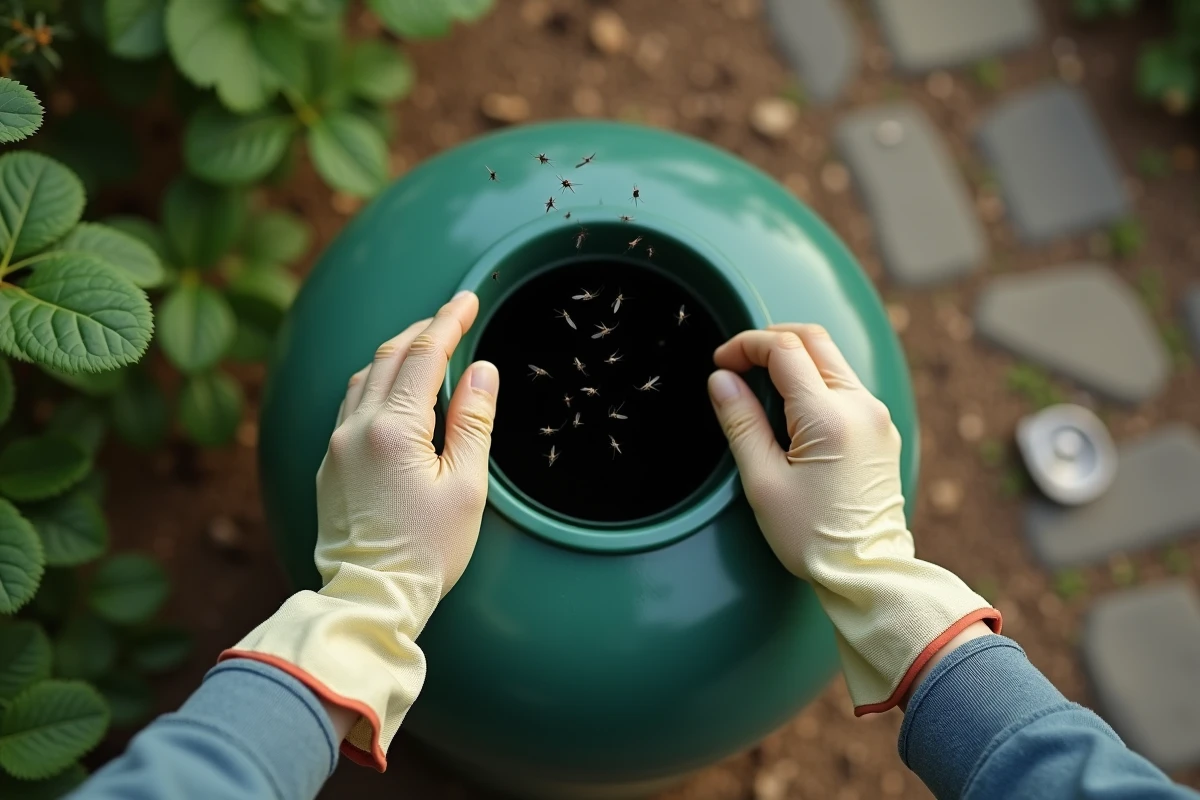
A pile of compost has never sounded the death knell for a summer without mosquitoes. Yet, the rumor grows with each return of the warm days: composting would be to throw open the door to winged invaders. A hint of truth, a lot of exaggeration. Compost naturally attracts a variety of wildlife, but its presence does not systematically lead to the proliferation of mosquitoes. Mosquito larvae only develop in stagnant water, a condition absent from well-maintained compost. However, poor compost management can upset this balance and encourage the emergence of unwanted pests.
The slightest excess moisture, shoddy drainage, and insects find an ideal landing ground. Too much wet material or poor water drainage creates those infamous pockets where mosquitoes settle. But the story doesn’t end there: other small creatures, often beneficial, thrive in a lively, well-aerated compost and contribute to the health of the vegetable garden.
Compost and mosquitoes: myth or real risk for your garden?
Compost has earned a reputation as an ally for the soil, but also as a subject of controversy. The rapid spread of the tiger mosquito in France is concerning and raises the question: does compost attract mosquitoes? Many imagine that the slightest composter in a corner of the garden is enough to trigger an invasion. The reality is more nuanced. Mosquitoes need stagnant water to lay eggs, not a pile in full fermentation that heats up and dries quickly.
To limit inconveniences, a few measures are sufficient. An airtight composter, turned regularly, prevents persistent moisture buildup and closes the door to mosquitoes. The classic mistake? Forgetting a bucket or an open bin in the rain, or leaving the compost saturated with soaked waste. Water seeps in, the heat drops, and mosquitoes take advantage of this to set up their offspring where no one expects them.
Here, in summary, are the actions that make a difference in limiting the presence of mosquitoes:
| Practice | Impact on mosquitoes |
|---|---|
| Regularly aerated compost | Limits wet areas |
| Covered waste | Prevents stagnant water |
| Closed composter | Slows insect breeding |
The question “does compost attract mosquitoes” deserves to be asked differently: it all depends on the care given to the compost. The solutions to prevent their appearance are well known and validated by both health recommendations and the expertise of gardeners, especially as the tiger mosquito spreads with climate change.
Which pests should you really watch for around the compost, and how to effectively keep them away?
Compost never leaves your garden indifferent: it attracts, intrigues, and sometimes disturbs. Pests have a keen sense for spotting good opportunities. While a well-maintained composter keeps mosquitoes at bay, other guests invite themselves: gnats, ants, rodents. Each has its preferences, tricks, and pace.
It is useful to know the most frequent visitors to react better:
- Gnats, which love overly moist organic matter and decaying waste.
- Ants, fond of unbalanced compost where they can establish their galleries.
- Rodents, attracted by food scraps unsuitable for composting.
The good news is that compost also attracts valuable allies: earthworms, pillbugs, beneficial microfauna. To reduce the compost’s appeal to pests, a few simple actions are enough:
- Turn the pile regularly to prevent the formation of stagnant wet areas.
- Alternate green waste and dry materials (dead leaves, mulch) to maintain a good balance.
- Remove any animal waste (meat, fish, dairy products) that attracts rats and mice and disrupts decomposition.
A closed composter, placed away from the house and vegetable garden, already does a lot to limit bad encounters. Some birds also get involved, pecking here and there at insects just emerging from the pile, actively participating in the garden’s balance. Add to this a varied choice of surrounding plants, regular monitoring of contributions, and the invasion scenario fades away. Compost then becomes a part of life, not a nest of troubles.
Beneficial insects, forbidden plants: preserving biodiversity without breaking the law
In the world of gardening, every species counts. Beneficial insects, whether discreet or well-known, play a key role in the health of your soil and in the natural fight against pests. Bees, ladybugs, hoverflies, ground beetles: these allies limit the populations of unwanted insects and protect crops. A well-managed compost attracts these allies while preventing mosquitoes from proliferating through constant moisture and turning management.
Ensuring plant diversity comes with attention to regulations. Certain plants should not end up in the compost, nor even in your garden. Datura, ragweed, tree of heaven: these species banned in France are closely monitored. They threaten biodiversity, compete with local species, and some endanger human or animal health.
To limit their presence and protect ecological balance, adopt these reflexes:
- Do not add invasive plant residues to the compost.
- Favor naturally repellent plants like lavender or lemongrass to keep mosquitoes away, without resorting to chemical products.
As the warm days return, life resumes in the compost and all around. Pollinators do their work, microfauna enriches the soil, and every attentive gesture anchors your garden in the long term. Preserving this fragile balance is to offer biodiversity a fertile ground, whether in open soil or on a simple balcony. Everyone can, in their own way, participate in this dynamic where compost and garden communicate, far from false fears and preconceived ideas.