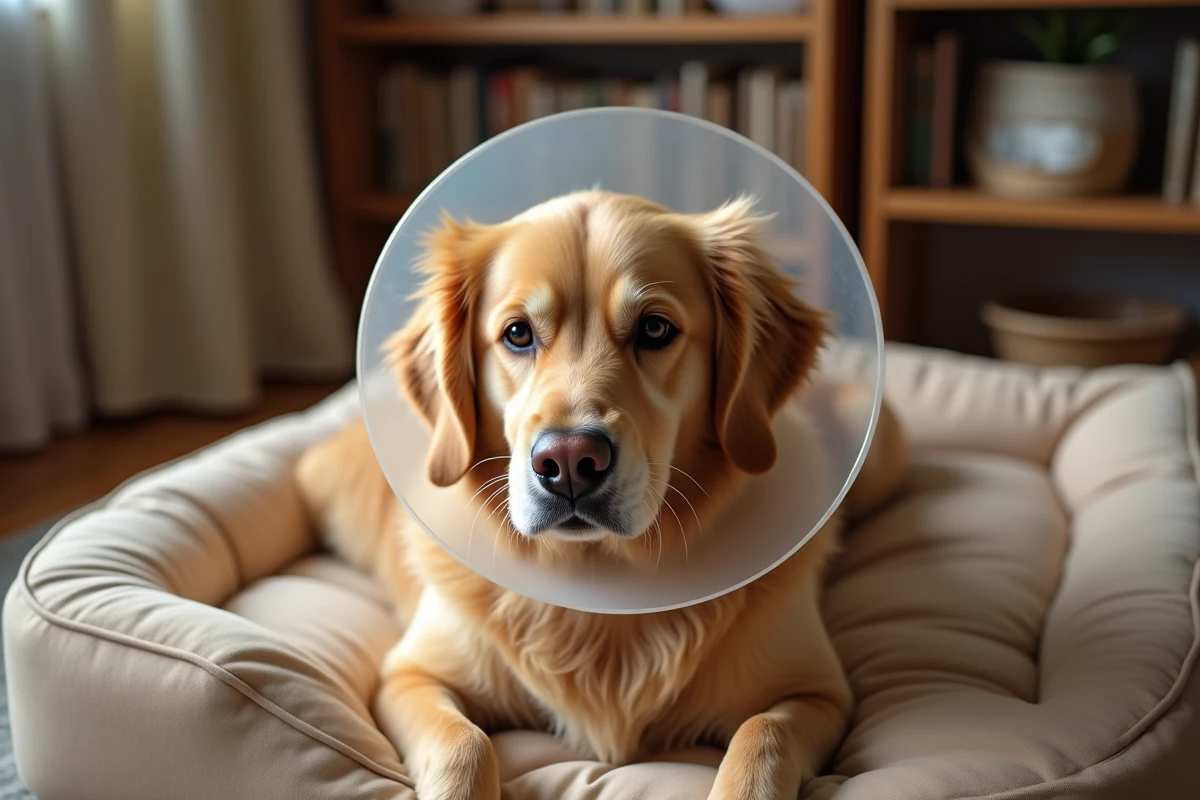
A dog wearing an Elizabethan collar after surgery or due to a skin wound finds itself in a situation where its usual references are disrupted. The collar limits its field of vision, alters its movements, and can disturb its feeding. Understanding these constraints allows for supporting recovery without increasing the animal’s stress.
Feeding and hydration with an Elizabethan collar: a problem often underestimated
The difficulty of accessing the food bowl is one of the most concrete effects of wearing a collar. The rigid cone hits the edges of the bowl, prevents the dog from reaching its food properly, and sometimes leads to a refusal to eat.
Several veterinarians recommend elevating the bowls so that the dog does not have to lower its head to the ground. A flat plate or a container wider than the diameter of the collar also facilitates eating. A dog that stops eating while wearing a collar should be monitored from the first hours, as dehydration can set in quickly, especially in the post-operative period.
Some owners remove the collar during meals. This practice remains acceptable as long as the animal is never left unattended: just a few seconds are enough for it to lick a wound or pull out stitches. There are precautions for a dog with a collar that detail how to manage these unsupervised moments.
Collar and behavioral stress: what the dog is really expressing
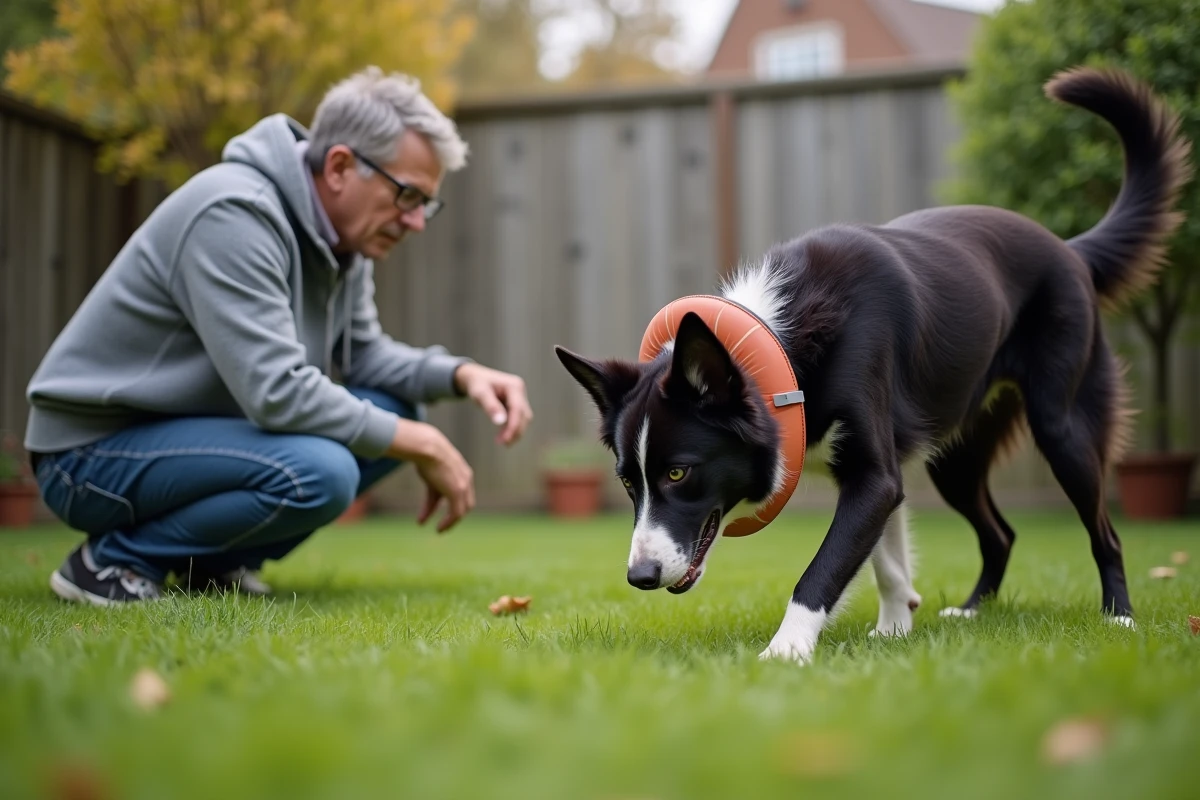
A dog that freezes, refuses to walk, or bumps into furniture is not just acting out. The collar alters its spatial perception and removes part of its peripheral vision. This disorientation generates real stress, sometimes intense in dogs that are already anxious.
Signals to look for
Signs of discomfort are not limited to immobility. A dog stressed by its collar may pant excessively, whine, tremble, or refuse to lie down. Some animals try to remove the device by rubbing against walls or backing up suddenly.
- Continuous panting outside of any physical effort, a sign of persistent discomfort
- Refusal to lie down or unusual positions (head held up, stiff body), often related to the cone’s discomfort on the ground
- Prolonged loss of appetite beyond the first day, which warrants a call to the veterinarian
- Repeated scratching of the neck around the attachment, which can cause secondary irritation
Post-collar stress does not always disappear upon removal of the device. Field reports vary on this point, but some dogs show lasting distrust of handling around the head and neck after several weeks of wearing it.
Gradual adaptation to the collar: duration and method
Putting a collar on a dog that has never seen one and hoping it will get used to it in a few minutes is unrealistic. The available data do not allow for a precise duration of adaptation, but the principle of gradual acclimatization is widely accepted among canine behaviorists.
The approach involves having the dog wear the collar for a few minutes each day in a positive context (treats, petting) before gradually extending the duration. In post-operative emergency situations, this habituation phase is not always possible. The dog then finds itself with an unknown object at a time when it is already weakened by anesthesia.
Securing the immediate environment reduces incidents by half. Remove fragile objects at the height of the cone, protect the corners of low furniture, block access to steep stairs during the first few days. The dog needs an open space to relearn how to move with its additional encumbrance.
Adjustment and daily checks
An improperly fitted collar causes as many problems as the absence of a collar. If too tight, it compresses the neck and hinders breathing. If too loose, the dog may slip a paw underneath or remove it entirely.
Two fingers should be able to slide between the neck and the collar to ensure proper support without compression. This check should be repeated daily, as post-operative swelling around the neck can alter the initial fit.
Wound healing and protection: when the collar is not enough
The collar protects the operated area from licking and scratching, but it does not replace regular veterinary follow-up of the healing process. A wound that becomes red, oozes, or emits an unusual odor under the collar requires prompt consultation.
Compulsive licking delays healing and promotes infections, which is why the collar remains prescribed even when the dog appears calm. Some animals only lick their wound at night or when they are alone. Removing the collar because the dog “seems to be doing better” is the most common cause of post-operative complications reported by veterinary clinics.
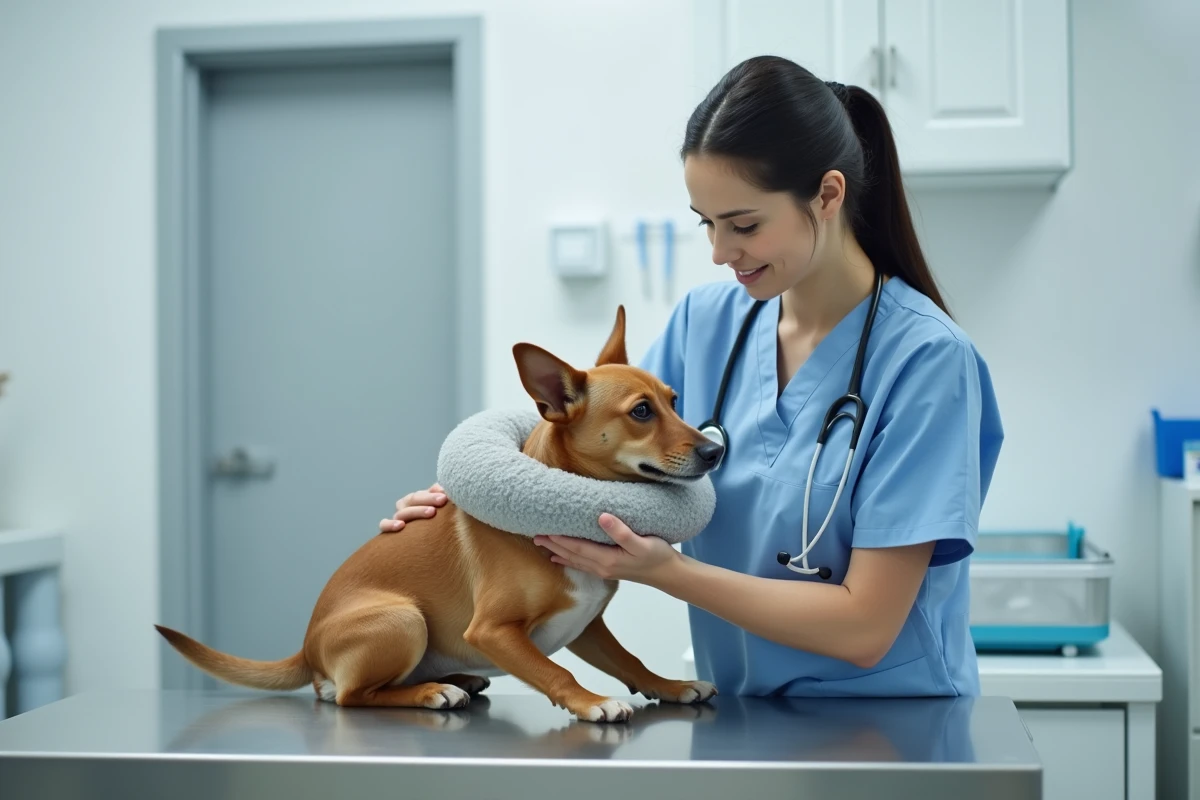
For dogs that truly cannot tolerate the classic rigid collar, alternatives exist: inflatable collars, soft fabric collars, or post-operative suits that cover the area without hindering the head. The choice depends on the location of the wound. An inflatable collar poorly protects a wound on a front leg, while a suit will be ineffective for an ear injury.
- Abdominal wound (spaying, digestive surgery): post-operative suit or protective body often better tolerated
- Wound on the head or ears: rigid or semi-rigid collar, the only truly effective option
- Injury on a limb: combination of collar and protective bandage, to be adapted with the veterinarian
The duration of wear varies according to the nature of the surgery and the individual healing speed of each animal. Only the treating veterinarian can decide on the definitive removal, usually after verifying that the wound is closed and that stitches or staples can be removed. Anticipating this removal without medical advice exposes the dog to the risk of reopening the wound and a return to the clinic, often more burdensome than the initial wearing of the collar.