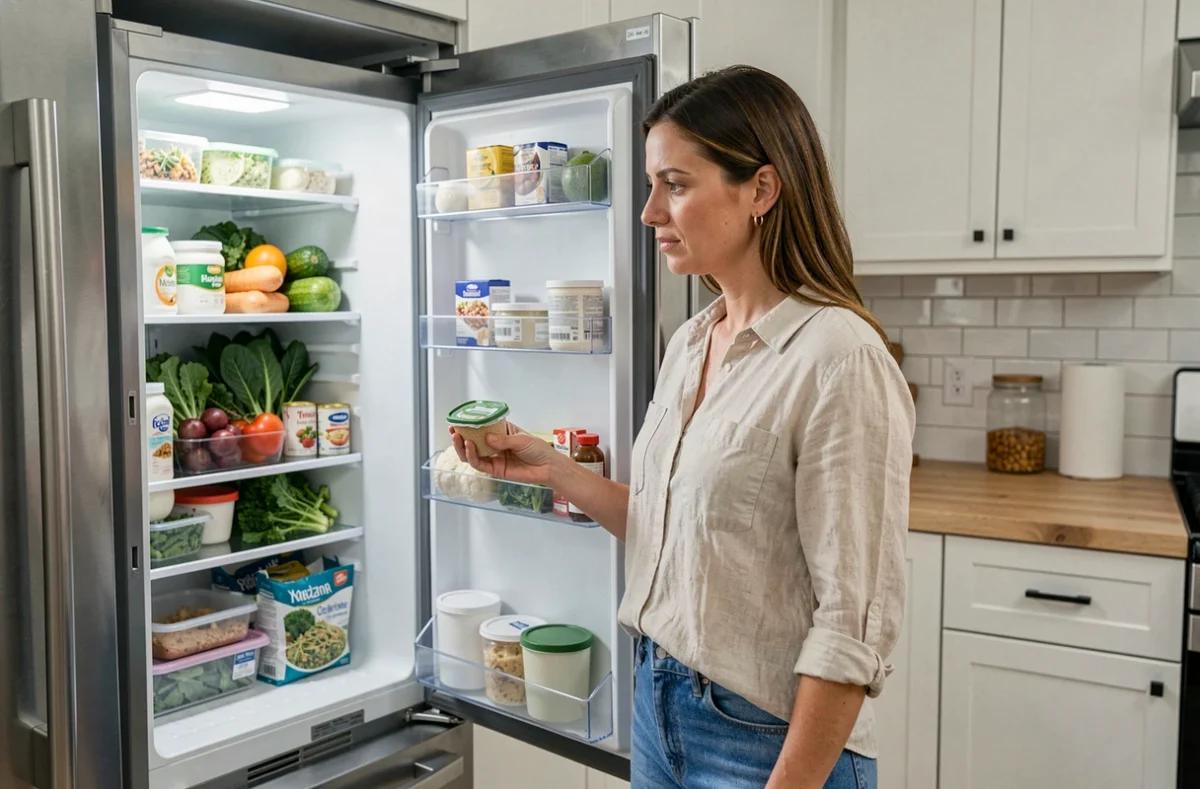
The refrigerator market now offers dozens of different formats, cooling technologies and capacities. Choosing a refrigerator that suits your kitchen and eating habits means weighing up several technical criteria against the realities of everyday life, from how often you shop to the types of food you store.
Actual energy use and the energy label: what the rating doesn’t tell you
The letter shown on the energy label gives you a general indication, not a definitive verdict. Two refrigerators in the same energy class can have significantly different energy consumption, especially if their usable capacities differ.
For a meaningful comparison, look at appliances of a similar type and capacity, then check their annual consumption in kWh. This information is shown on the label and can also be checked in the European EPREL database, which you can access online using the QR code on the label.
A larger refrigerator uses more energy, even if it has a good energy rating. Before opting for a larger capacity, take a quick inventory of what you normally store to see whether you’ll actually use the extra space. A comparison site such as monfrigo.net makes this easier by comparing the technical specifications of a wide range of models.

Refrigerator capacity: choose the right size for your household
A common rule of thumb is around 100 to 150 litres for one person, plus 50 litres for each additional person. This guideline works for typical use, but may need adjusting.
Someone who batch-cooks on Sundays and stores five days’ worth of meals will need more space than a couple who buy fresh food every evening. How often you shop matters just as much as how many people you’re feeding.
Built-in or separate freezer
If you don’t eat many frozen foods, a refrigerator with a small freezer compartment should be enough, leaving more room for fresh food. Households that prepare meals in advance or buy in bulk may be better off with separate appliances and a full-size standalone freezer.
Beware of the “bigger just in case” mindset: a second appliance running around the clock increases your electricity bill without necessarily meeting a regular need.
Cooling type: static, fan-assisted or frost-free
The type of cooling has a direct impact on food preservation and appliance maintenance.
- Static cooling allows air to circulate naturally, creating different temperature zones between the top and bottom of the refrigerator. It’s suitable for smaller capacities and tighter budgets, but requires regular defrosting.
- Fan-assisted cooling uses a fan to distribute cold air more evenly. The temperature is more consistent from one shelf to another, helping to reduce variations in food preservation.
- Frost-free cooling (no frost) prevents ice from forming and maintains an even temperature. It makes maintenance easier, but appliances with this technology generally use slightly more energy and cost more to buy.
For perishable foods (meat, fish and dairy products), Anses recommends keeping an eye on the coldest part of the refrigerator, which should be at 4 °C. A thermometer placed in this area is the most reliable way to check the actual temperature, especially if the built-in display isn’t very accurate.
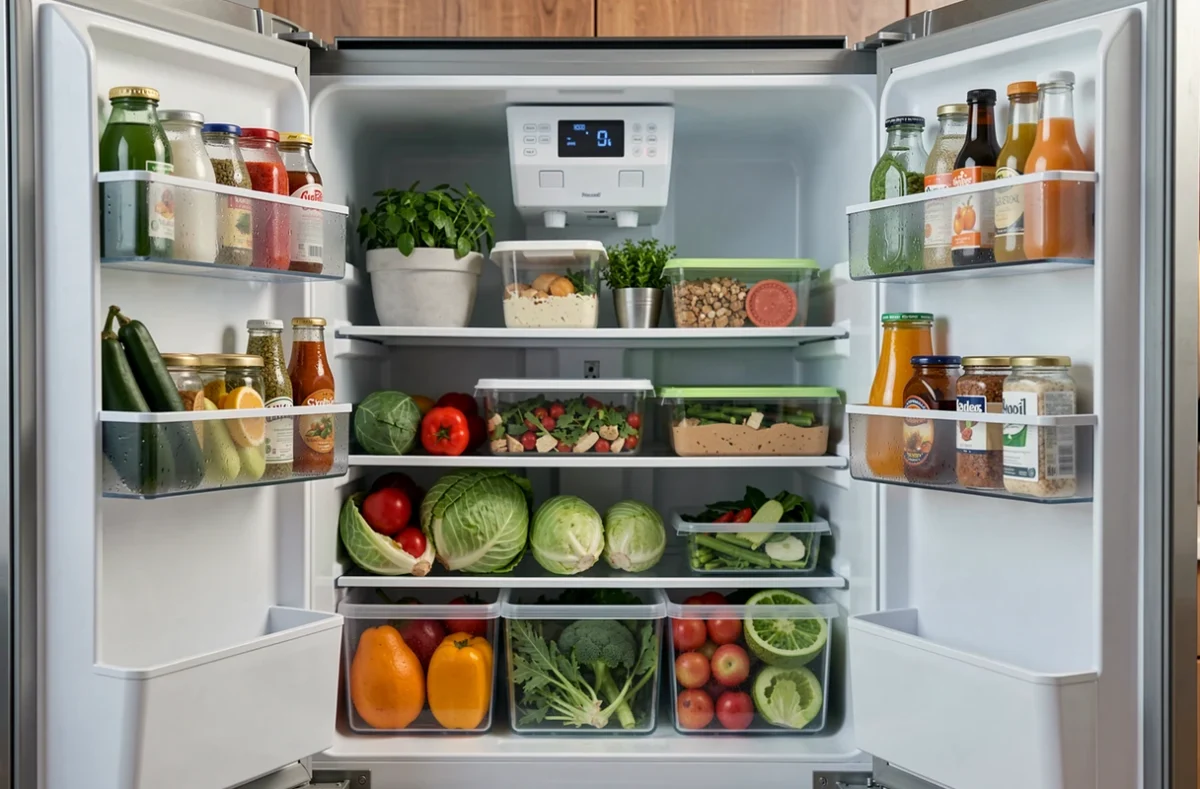
Refrigerator dimensions and kitchen installation requirements
The ideal capacity is no use if the appliance won’t fit in the available space. Before you start looking, measure three things: the width, the depth (including the plug and the clearance needed for rear ventilation) and the height available beneath the worktop or wall cabinet.
Freestanding or built-in
A built-in refrigerator fits into your kitchen cabinetry and is concealed behind a cabinet door. It creates a seamless look, but the range of capacities is more limited and the price is higher for the same capacity. A freestanding model offers more formats (fridge-freezer, American-style, multi-door) and is easier to replace.
Wide refrigerators (70 to 80 cm) offer around 30% more capacity than a standard 60 cm model. They’re suitable for larger families, provided there’s enough room in the kitchen and the door won’t block a walkway when opened.
Noise level
A refrigerator runs constantly. In an open-plan kitchen, noise becomes an important comfort factor in its own right. The quietest models have a noise level below 40 dBA, comparable to a faint background murmur.
Refrigerator repairability and lifespan: still unclear
France requires repairability ratings for certain categories of appliances, but refrigerators don’t yet carry one. So when you’re buying, there’s no score to help you compare how easy different models are to repair.
There are still a few useful indicators. The availability of spare parts over an extended period (some manufacturers promise up to fifteen years) gives you an idea of the appliance’s expected durability. Checking this before you buy can help you avoid being left with an unrepairable appliance after just a few years.
European regulations on fluorinated gases (the F-Gas Regulation) are gradually restricting refrigerants with a high global warming potential. Manufacturers are switching to refrigerants with a lower climate impact, such as hydrocarbons. This change doesn’t directly affect consumers’ choices today, but it may influence the cost of maintenance work on appliances that use older refrigerants.
A refrigerator is one of the few household appliances that runs 24 hours a day. Over ten years of use, a difference of just a few dozen kWh per year between two models can add up to a cost difference that often exceeds the gap in their purchase prices. Comparing the capacity you actually need, the cooling type best suited to your food and the physical constraints of your kitchen remains the most reliable way to avoid regretting your choice.