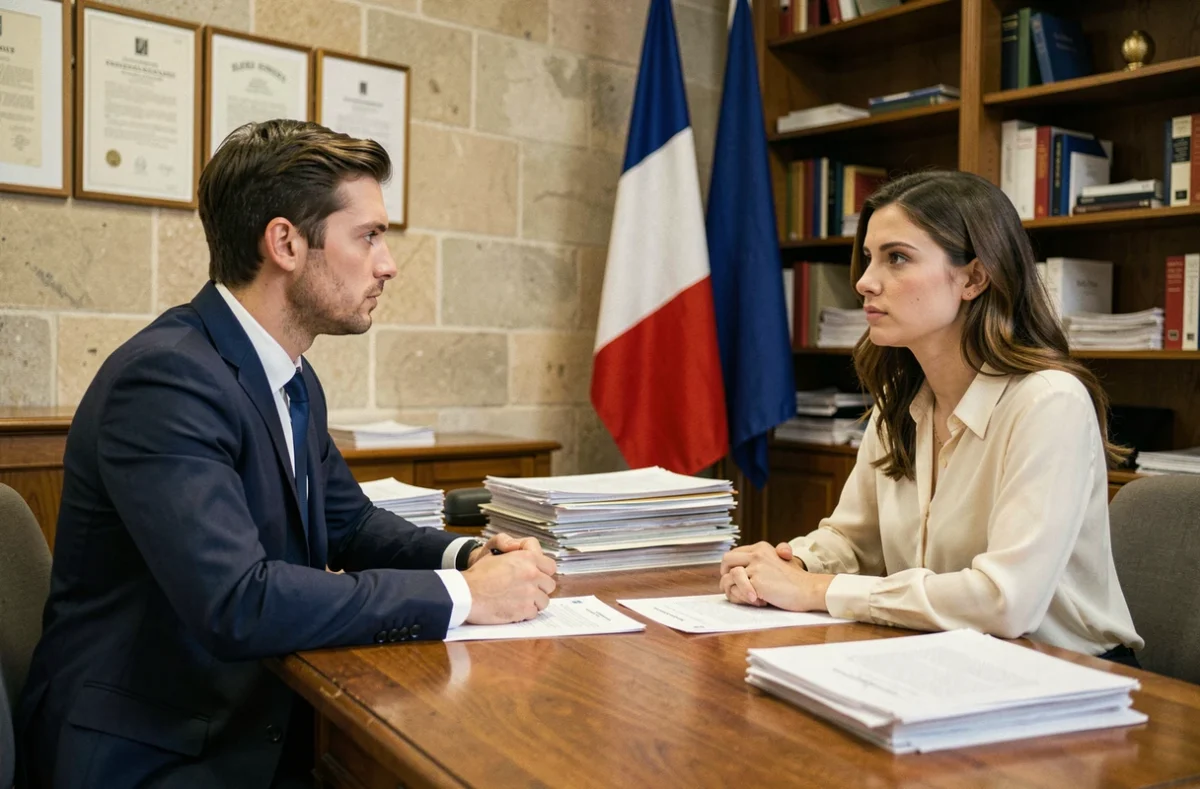
A marriage interview is a meeting conducted by a civil registrar with the prospective spouses before the wedding ceremony. Its main purpose is to ensure that each person’s consent is freely given and informed. Provided for under the Civil Code, this procedure is part of the effort to combat sham marriages and forced unions—two situations that the November 2006 law strengthened the means of detecting.
Legal framework for marriage interviews at the town hall
The preliminary interview is based on Article 63 of the Civil Code. The civil registrar in the municipality where the wedding will take place summons the prospective spouses, together and then separately if necessary, to confirm that their plans to marry are genuine.
People often ask whether a marriage interview is mandatory. In practice, the interview is the rule, not the exception. However, the civil registrar may waive it in two specific cases: when it is physically impossible (for health reasons, for example), or when the application seems clear enough that an interview would be unnecessary.
This discretion belongs to the civil registrar, not the prospective spouses. In other words, it is not up to the couple to decide whether or not to go through this step.

Interviewing prospective spouses: what to expect
The interview takes place at the town hall, usually after the marriage application has been submitted and before the banns are published. The summons is sent by mail or delivered by phone, depending on the municipality’s practices.
Joint and separate interviews
The civil registrar first meets with both prospective spouses together. They may be asked about their backgrounds, their plans for life together, and how they met. The aim is not to assess the strength of their relationship, but to identify any possible signs of coercion or a sham marriage.
If any doubts remain, the registrar may interview each person individually. Separate interviews help confirm that their answers are consistent and that neither prospective spouse is being pressured by someone else.
Using an interpreter
If one of the prospective spouses does not understand French, an interpreter may be called in. This option is provided for under the procedure to ensure that consent given during the interview is genuinely informed.
Preparing for your marriage interview: what the civil registrar checks
The interview is not a test with right and wrong answers. The civil registrar is looking to confirm that the couple genuinely intends to marry. The following topics are commonly discussed:
- How the couple met and how long they have been together
- Their plans for living together after the wedding (housing and day-to-day arrangements)
- How well they know each other’s family and work situations
- Whether a third party has pressured or coerced either person into deciding to marry
In most cases, answering naturally and consistently is all that is needed. Prospective spouses do not need to prepare any specific documents for the interview. The marriage application already submitted to the town hall contains the necessary paperwork.
Referral to the public prosecutor: what happens if concerns arise
If the civil registrar finds serious indications that a marriage may be fraudulent or forced, they are required to refer the matter to the public prosecutor. The interview does not mean that the marriage application has been accepted or rejected: it is an assessment step, not a final decision.
The prosecutor then has 15 days to make an initial decision. There are three possible outcomes:
- Authorize the wedding ceremony
- Formally object to the marriage
- Request a stay to conduct further investigations
This process is triggered only in specific circumstances. The vast majority of interviews lead to a normal wedding ceremony.

Marriage interviews when one spouse lives abroad
Living far away does not remove the requirement for an interview. If one of the prospective spouses lives abroad, the relevant diplomatic or consular authority may be asked to conduct the interview remotely.
This applies in particular to couples where one person lives outside France and cannot travel to the town hall before the planned wedding date. The procedure makes it possible to verify consent without disrupting the wedding schedule.
The application then follows the usual process: publication of the banns, verification of the documents, and the ceremony, provided no objection is raised.
For most couples, the marriage interview is a quick formality. The summons arrives a few weeks after the application is submitted, and the interview rarely lasts more than 20 minutes. The main thing to remember is to answer the civil registrar’s questions honestly, without trying to anticipate a trick question that does not exist.