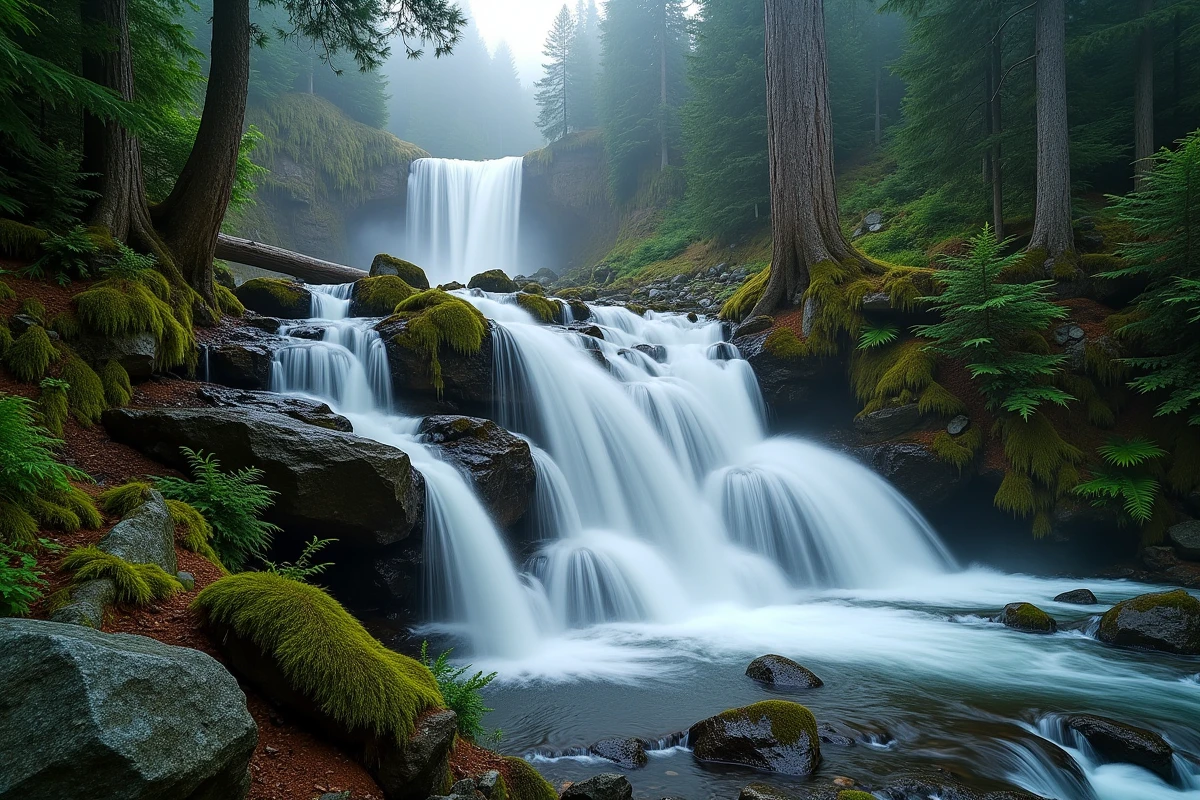
You walk along a mountain path and water bursts before you, noisy and white. Waterfall or cascade? Most hikers use these two words as synonyms. In the field, the distinction rests on a simple physical criterion: the way the water descends the rocky slope.
The geological criterion that separates waterfall and cascade
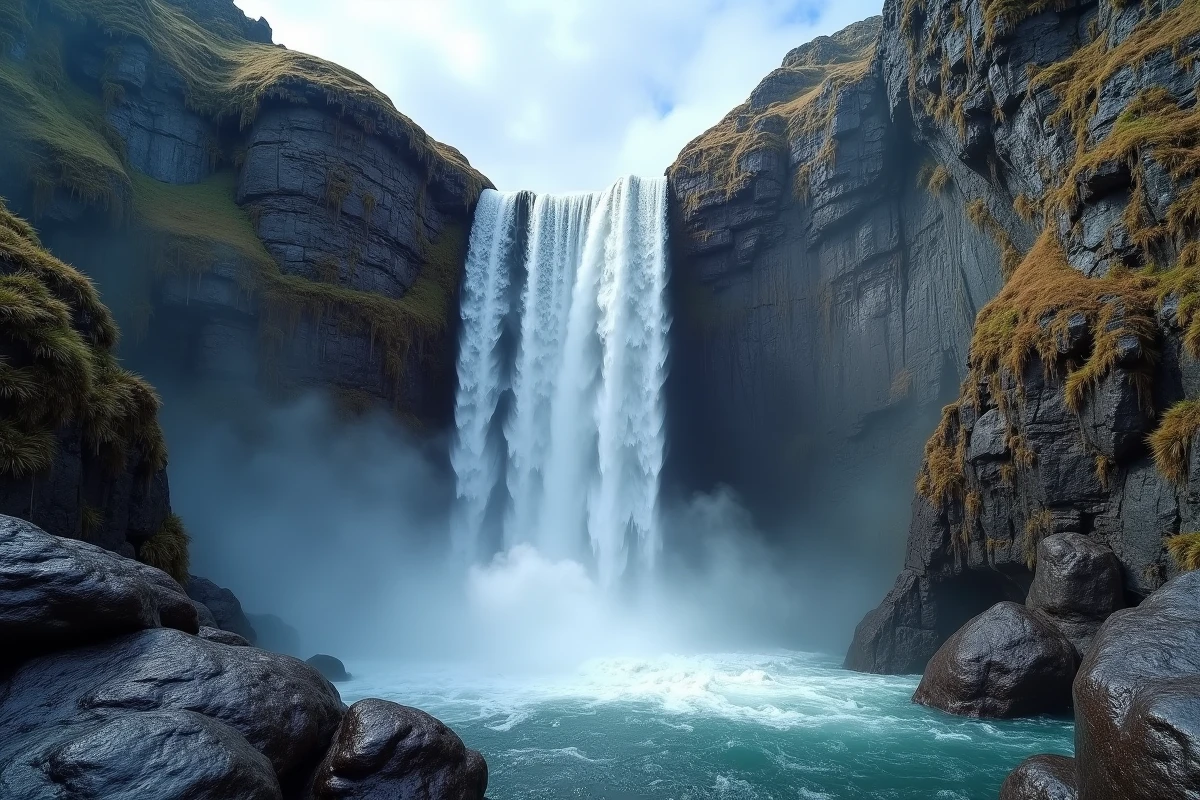
A waterfall falls vertically into the void, from a steep rocky ledge. The water leaves the rock, falls through the air, and strikes a pool below. The English term “falls” captures this idea of free fall well.
A cascade, on the other hand, descends in successive steps. The water remains in contact with the rock during its descent, bouncing from one ledge to another, like a natural staircase. The word actually comes from the Italian “cascata,” which is derived from “cascare” (to fall in stages).
This criterion of contact with the rock is the most reliable in real situations. If the water completely detaches from the wall before hitting the pool, you are observing a waterfall. If it glides, bounces, and divides over rocky steps, it is a cascade. To delve deeper into the difference between cascade and waterfall, one must also look at the distribution of hydraulic energy.
Have you noticed that the sound is not the same? A waterfall produces a deep rumble concentrated at the point of impact. A cascade emits a more diffuse sound, spread over the entire slope. This auditory detail is a good clue when vegetation obscures the view.
Energy, flow, and safety: how the shape changes things concretely
The distinction is not just a matter of vocabulary. It has direct consequences on safety and aquatic wildlife.
Impact on swimming and canyoning
At the foot of a waterfall, the water strikes the pool with concentrated force. This phenomenon creates powerful return currents beneath the surface, capable of pulling a swimmer down. Protected area managers often prohibit swimming at the foot of waterfalls for this reason.
Tiered cascades distribute energy over a longer distance. Each step absorbs part of the force. Some sites allow swimming in the intermediate pools of a cascade, where the current is moderate.
In the canyoning community, this distinction is codified. The same river can be classified as an easy route upstream, in a section of passable tiered cascades, and as a challenging route as soon as a vertical drop section requiring rappelling or technical jumping appears.
Impact on the ecosystem
For the same volume of water, a waterfall delivers more energy at a single point. It massively oxygenates the pool below, but aquatic plants must be firmly anchored to the bottom to withstand the current.
The cascade distributes this oxygen supply along the entire length of the slope. Aquatic habitats are often more varied there, with different micro-environments at each step.
Recognizing the shape in the field: visual and auditory clues
Here are the practical criteria to observe when you are faced with a sloping watercourse:
- Water trajectory: does the water detach from the rock (waterfall) or does it remain in constant contact with the wall (cascade)?
- Number of steps: a single steep edge indicates a waterfall, while several successive ledges signal a cascade
- Shape of the pool: a waterfall usually carves a deep, circular pool at the point of impact, while a cascade forms shallow basins at each step
- Sound: concentrated rumble for the waterfall, spread-out murmur for the cascade
- Foam: a waterfall produces a plume of suspended droplets (mist), while a cascade generates lines of white foam along the ledges
When nature blurs the categories
In the field, reality is not always as clear-cut as theory. Many formations combine both types.
The Niagara Falls, for example, are indeed waterfalls in the strict sense: the water falls from a steep ledge in free fall. Conversely, many sites labeled “cascade” in tourist guides are actually waterfalls, and vice versa.
The trap of seasons and drought
The increase in drought episodes alters the visual aspect of these formations. Small cascades with many steps become seasonal, reducing to mere trickles in summer. Taller waterfalls continue to exist but with such reduced flow that they resemble fine cascades.
As a result: the photo in the hiking guide no longer matches what you see in August. To correctly identify the formation, rely on the geology (the shape of the rocky ledge) rather than the current flow.
Mixed formations
Some rivers feature a cascade that ends with a free fall, or a waterfall whose base feeds a series of cascading steps. In this case, describe the section you are observing rather than the whole. Canyoning professionals do exactly this: they break the route into homogeneous sections.
- Upper section in tiered cascade: moderate difficulty, walking progression possible
- Lower section in vertical drop: requires rappelling equipment
- Receiving pool: assess the return current before any approach
The next time you come across sloping water, check if it leaves the rock or if it stays glued to it. This simple test will give you the answer. And if both mix, it’s probably the most common configuration in the mountains: nature has not read geography textbooks.