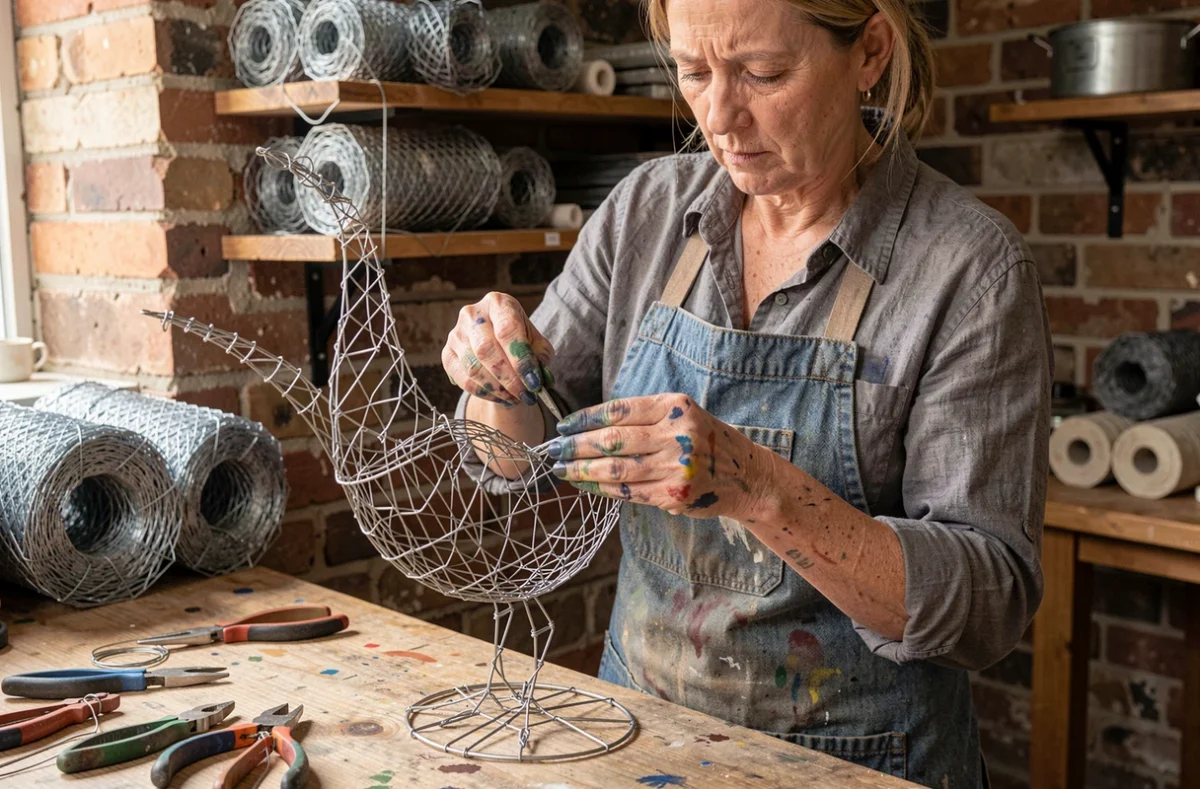
Hexagonal mesh, often reduced to its role as a fence, offers a shaping potential that few rigid materials can claim. Its ability to conform to complex volumes while maintaining structural integrity makes it a versatile framework, provided that a few technical parameters are mastered right from the choice of the roll.
Corrosion protection of the mesh: the parameter that tutorials overlook
The type of surface treatment determines the durability of the sculpture as much as its technical feasibility. Galvanized mesh remains the most reliable choice for outdoor use, as the zinc coating protects the steel against ambient moisture and weather conditions for several years.
Plastic-coated mesh, often recommended for its visual appeal, poses a concrete problem: the coating (papier mâché, mortar, slip) adheres poorly to the smooth surface of the plastic. It is then necessary to sand or score the coating before applying any layer, which partially negates the benefit of the protection.
For a sculpture intended to remain indoors, bare steel mesh is sufficient. However, we recommend applying a coat of matte varnish after shaping, as prolonged handling and residual moisture from a coating can initiate surface oxidation within a few weeks.
The choice of mesh size is also important. A fine mesh facilitates detailed work (faces, animal paws) but reduces the overall rigidity of the structure. An artisan who combines papier mâché mesh techniques on Zam Création D’Intérieurs with a medium mesh framework achieves a good compromise between precision and strength.
Mechanical assembly of the mesh without welding: ties, twists, and staples
Welding is not necessary to build a solid framework. Simple mechanical assemblies are suitable for the majority of projects, including medium-sized sculptures intended for the garden.
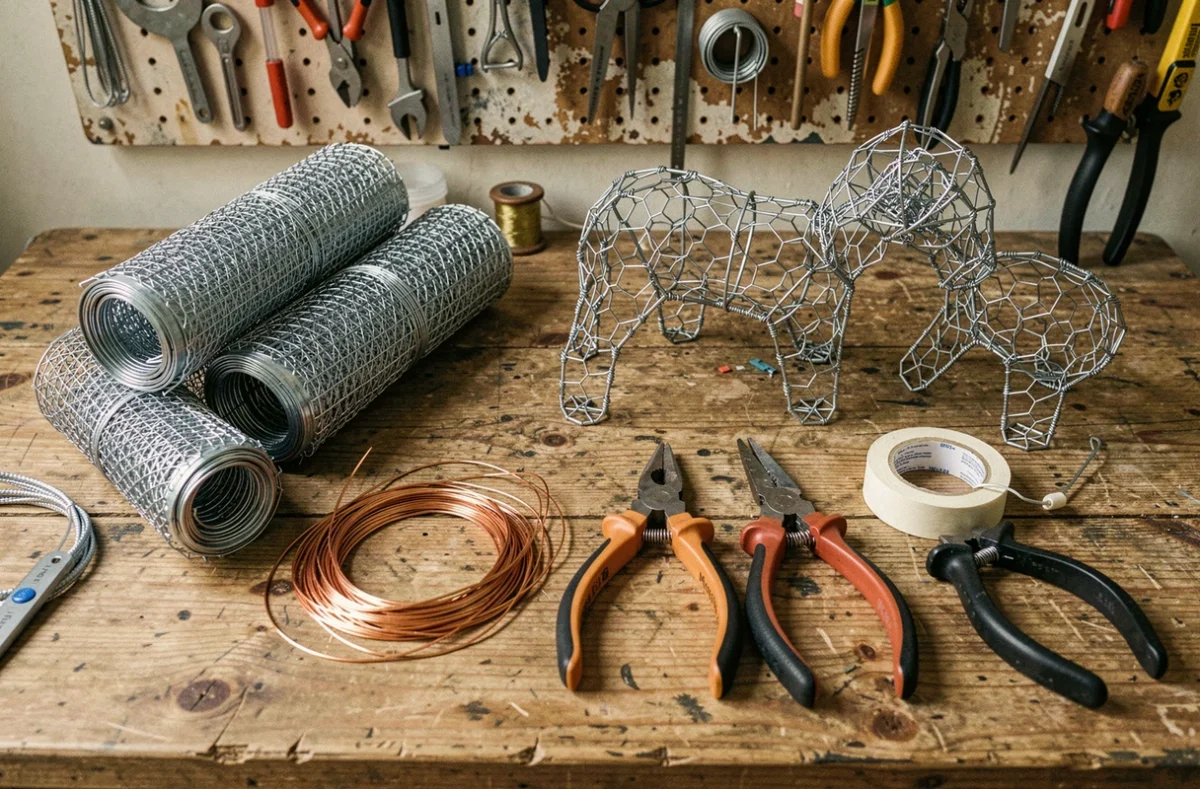
The basic technique involves crossing two sections of mesh over a few centimeters, then tying the edges with fine wire (diameter smaller than that of the main mesh). The tying wire is wrapped several times around the two thicknesses, then the cut end is folded back into the structure.
Assembly methods suited to the project level
- Simple twist: two strands of wire twisted together for three or four turns. Quick, suitable for lightly stressed joints (upper parts, decorative elements).
- Reinforced loop: the wire passes through the mesh, forms a tight loop, then returns in the opposite direction. Used for stress areas (base of the sculpture, support points).
- Metal staple: applied with a specific plier, it replaces manual tying on large formats. Significant time savings, but requires purchasing the dedicated tool.
Each joint must be inspected before moving on to the next step. A poorly tightened tie can be detected by applying slight lateral tension to the assembled panel.
Safety and management of sharp ends
Cut wire ends pose the main risk when working with mesh. This point is consistently underestimated in content focused on visual inspiration, while a poorly folded wire tip can penetrate a thin glove or injure a visitor.
Before any shaping, we use flat-nose pliers on each end to bend it inward into the structure. In areas accessible to the public (garden sculpture, event installation), a second pass is necessary after shaping, as bending the mesh exposes new tips.
Wearing thick leather gloves (like handling gloves) is non-negotiable during cutting and assembly. Latex or nitrile gloves do not protect against punctures.
Covering the structure: papier mâché, coating, and finishes
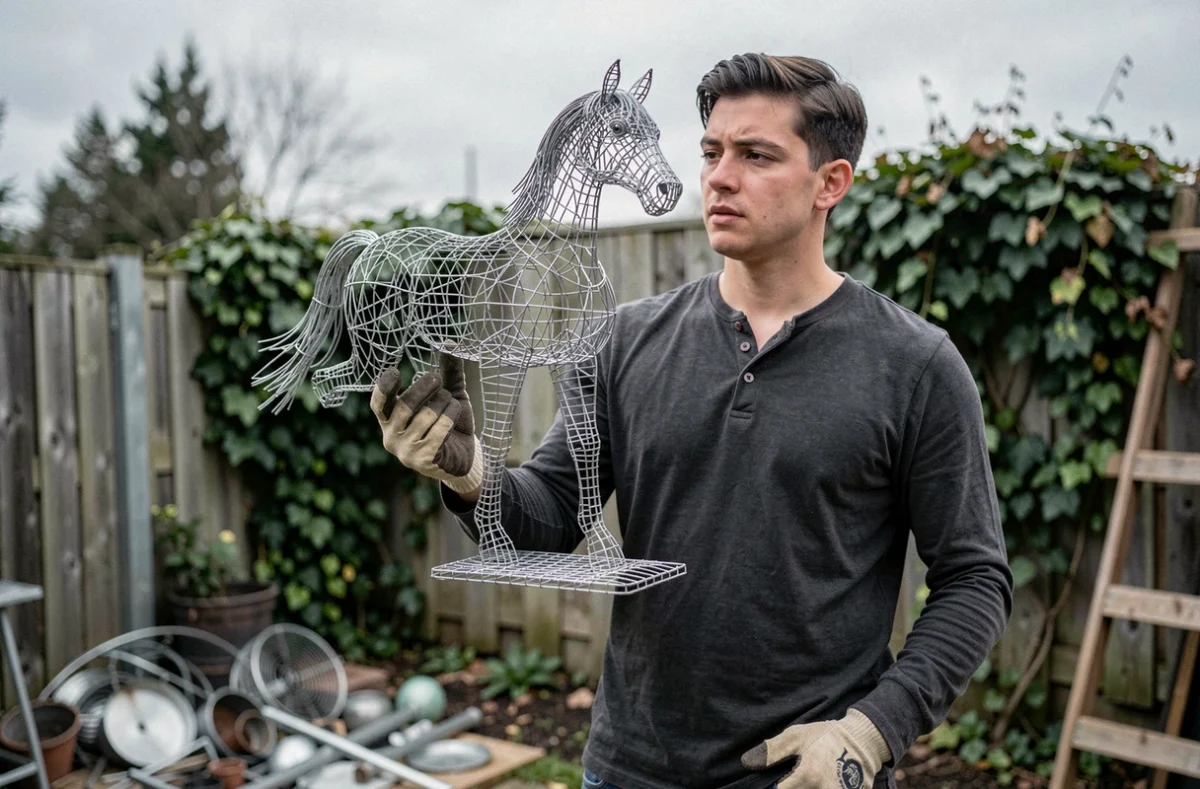
The mesh structure is merely a framework. The choice of covering determines the final appearance and the preservation of the sculpture over time.
Papier mâché on galvanized mesh
The most accessible method remains newspaper soaked in wallpaper paste, applied in successive layers. Each layer must dry completely before the next, or else moisture pockets will form that weaken the surface and promote mold growth.
Three to five layers of papier mâché are sufficient to achieve a rigid shell on standard-sized mesh. Beyond that, the additional weight risks deforming the framework if it has not been reinforced at the support points.
Coating and slip for a mineral finish
For a stone or terracotta appearance, a clay-based coating or slip applied with a wide brush offers a denser finish. The slip (clay diluted in water) adheres well to galvanized mesh but requires a long drying time and a ventilated space.
The coating does not replace the strength of the framework: it provides texture, not mechanical support. An insufficiently tied structure will eventually crack under the weight of the coating, even if thin.
- Papier mâché: lightweight, inexpensive, ideal for indoors or temporary decorations. Sensitive to prolonged moisture.
- Clay slip: convincing mineral finish, good adhesion on galvanized, but fragile to impacts.
- Exterior acrylic coating: weather-resistant, applicable with a roller, but masks the texture of the underlying mesh.
Conservation and exhibition of a mesh sculpture
A papier mâché-covered mesh sculpture cannot withstand direct exposure to rain. Even with a protective varnish, water eventually seeps into the joints and softens the paper. For permanent outdoor use, the covering must be entirely mineral or synthetic.
Indoors, the main enemy remains ambient humidity. A high level causes the paper to warp and accelerates the oxidation of uncovered mesh areas. Storing the piece in a dry, ventilated space significantly extends its lifespan.
Dismantling a mesh sculpture generates metal scraps. An element intended to be reused in another project is not considered waste, unlike material aimed at recycling or disposal. Keeping the scraps clean and sorted allows them to be reused for smaller pieces or repairs.