Which decorative elements have the most impact on the final atmosphere of a wedding, and which can be minimized without guests noticing the difference? This question is worth asking as ceremonies are shifting towards more intimate and experiential formats, according to several field observations reported by La Montagne in September 2026. Comparing the actual visual impact of each decorative element allows for prioritizing choices rather than accumulating unfiltered ideas.
Comparative visual impact of key wedding decoration elements
Not all decorative elements produce the same effect perceived by guests. The table below summarizes the most common elements by classifying them according to their visibility during the ceremony and reception.
| Decorative element | Ceremony visibility | Reception/table visibility | Reusable after the wedding |
|---|---|---|---|
| Fresh flowers (bouquets, centerpieces) | High | High | Yes, if reconditioned on the same day |
| Lighting (string lights, candles, lanterns) | Medium (depending on timing) | High in the evening | Yes |
| Stationery (table plans, place cards) | Low | Medium | No (single-use) |
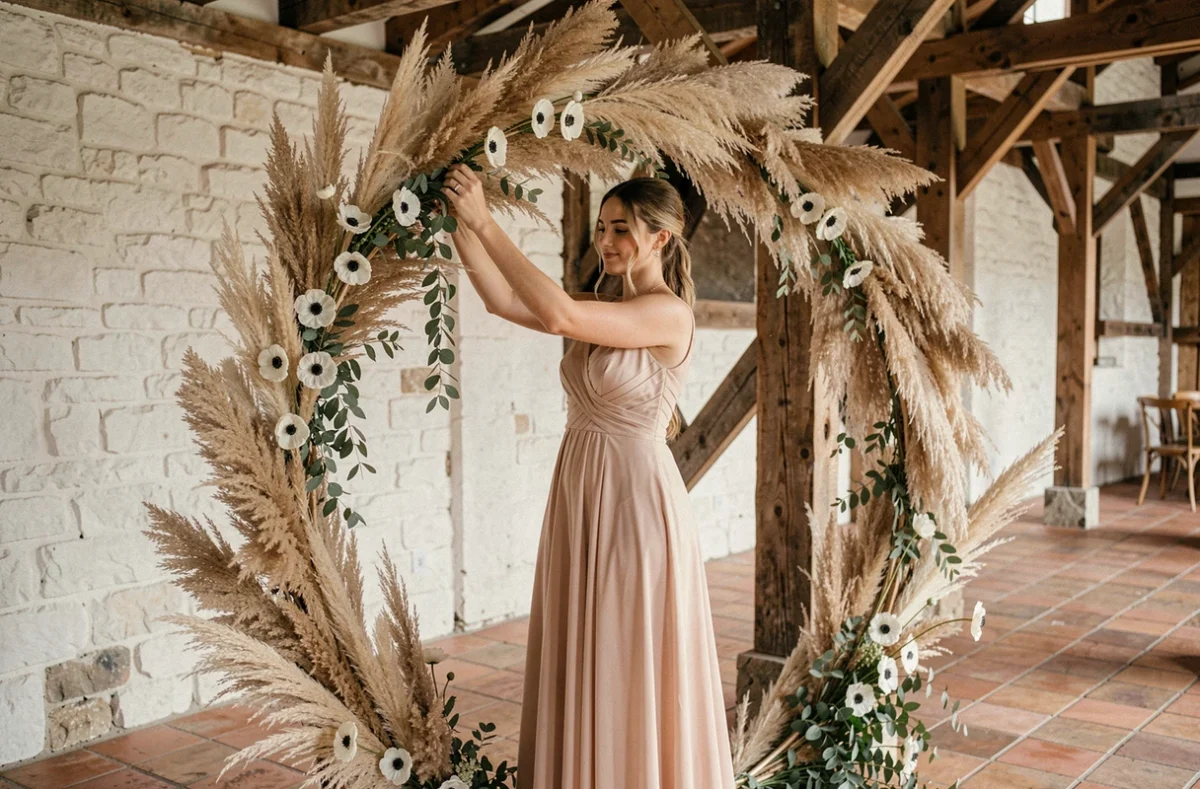
| Balloons and arches | High | Low after installation | No |
| Furniture and textiles (tablecloths, table runners, covers) | Low | High | Yes (frequent rental) |
| Confetti / tosses | Occasional | None | No |
This comparison highlights a clear gap: flowers and lighting concentrate the majority of visual impact throughout the day. Elements like stationery or confetti, while symbolic, are perceived for only a few seconds.
To explore the different ranges available, you can browse the decor on Le Spécialiste du Mariage to calibrate your choices according to the selected style.
Colors and palette: the return of vibrant shades in wedding decoration
The pastel countryside theme has long dominated French weddings. In 2026, industry professionals report a notable increase in more assertive palettes. Fuchsia and orange, paired with seasonal flowers, are gradually replacing powdery and ivory tones in requests received by decorators.
This shift changes the purchasing logic. A colorful palette requires less floral volume to produce a striking effect. Three centerpieces of orange dahlias on a cream tablecloth create a more memorable contrast than ten small bouquets of gypsophila scattered without hierarchy.
Combining vibrant colors with a coherent theme
The classic pitfall is to multiply colors without a guiding thread. A simple rule works: choose a dominant shade, a secondary shade, and a neutral. Raw wood or ecru linen serves as a neutral base, while the dominant color appears on the flowers and stationery, and the secondary on the table textiles.
- Dominant fuchsia + secondary terracotta + neutral natural linen: festive rendering suitable for outdoor summer weddings
- Dominant burnt orange + secondary burgundy + neutral light wood: autumn palette that also works indoors
- Dominant saffron yellow + secondary olive green + neutral off-white: Mediterranean atmosphere without falling into the Provençal cliché
In each case, limiting the palette to three shades avoids the visual cacophony produced by uncoordinated accumulations.
Wedding flowers: reuse as a design constraint
The floral trend of 2026 is no longer limited to minimalism, according to Heemskerk Flowers. Compositions are gaining in volume and variety. At the same time, the reuse of flowers after the ceremony is becoming both an operational and ecological issue.
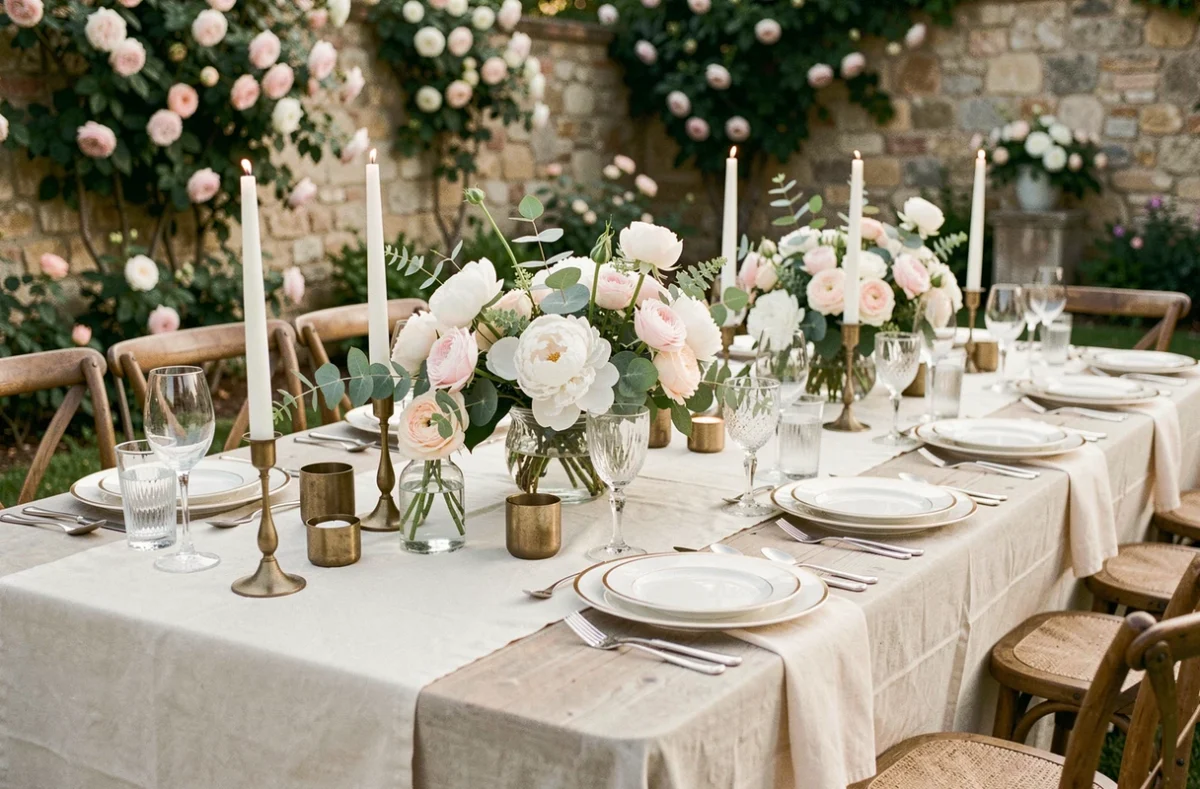
Specifically, this means that floral arrangements must be designed to be disassembled and redistributed on the same day. A monobloc centerpiece in a narrow vase is not suitable for reconditioning. In contrast, modular compositions in separate containers allow guests to take home a bouquet or redirect them to a nursing home or local hospital.
French flowers and seasonality
Using flowers grown in France and available in season reduces logistical footprint and improves the longevity of compositions. A dahlia picked the day before lasts better in a vase than an imported rose stored in a cold room for several days.
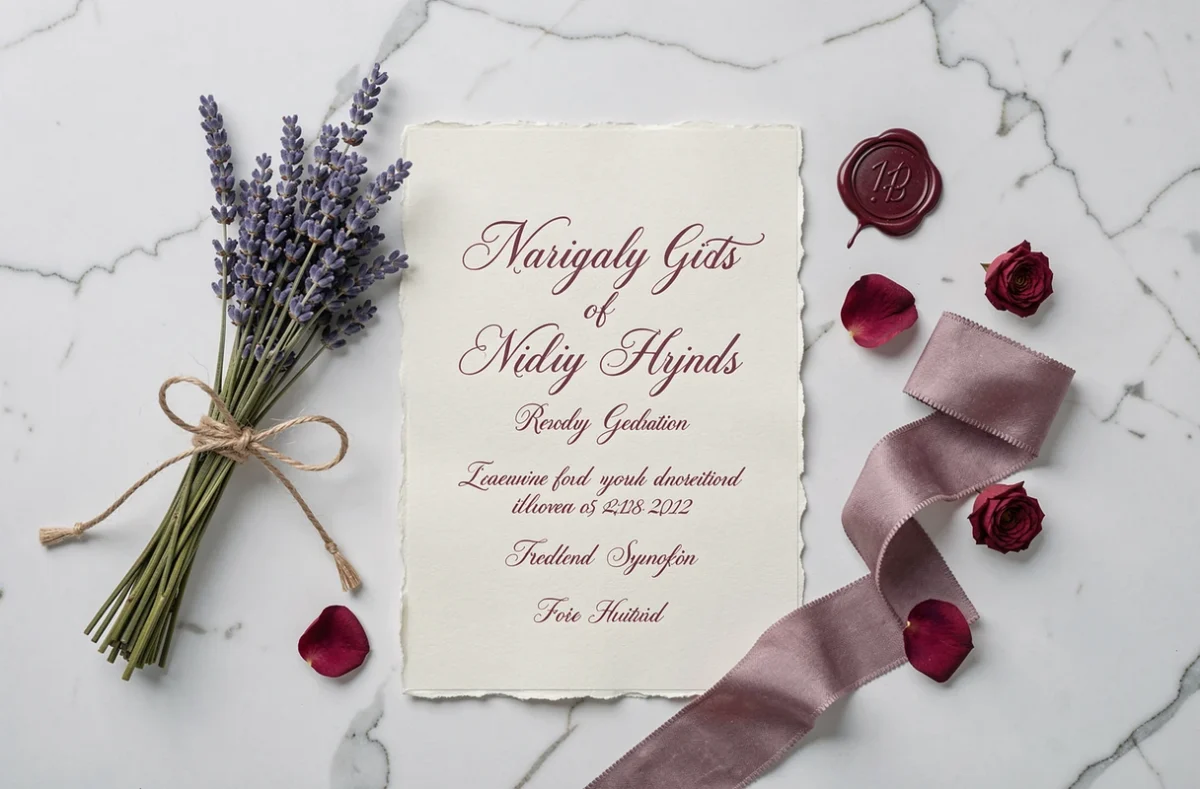
For a wedding in September, dahlias, zinnias, and cosmos provide generous volume at a cost lower than that of peonies, which are only available in May-June. Choosing flowers according to the local blooming calendar remains the most effective lever to reconcile abundance and budget control.
Confetti and tosses: check local regulations before purchasing
The tossing of rice or confetti is part of the gestures expected by guests, but its feasibility entirely depends on the location. There is no general national prohibition on tossing rice in France. However, mayors can regulate or prohibit these practices near public buildings.
Before ordering biodegradable confetti or dried petals, a useful step is to contact the town hall and the venue manager directly. Some private estates accept petals but refuse rice, while others prohibit all tossing indoors.
- Dried flower petals: accepted in most outdoor venues, decompose naturally within a few days
- Biodegradable paper confetti: check that they do not contain persistent dyes on stone
- Traditional rice: most often refused near churches and town halls for cleaning reasons
- Soap bubbles or ribbons: residue-free alternatives suitable for the most restrictive venues
Checking local guidelines avoids investing in a decorative element that cannot be used on the big day.
Reception lighting: the element that transforms an ordinary venue
Among all decorative elements, lighting remains the one with the most favorable cost-to-effect ratio in the evening. String lights with warm bulbs stretched above the tables are enough to radically change the perception of a space, even a sober one during the day.
Candles as a complement create variations in light height on the table. Combined with glass votives or lanterns placed along the aisle, they add a dimension that neither flowers nor stationery can produce alone.
Lighting affects the overall atmosphere, not a specific point, which explains why guests often cite it as the first sensory memory of the evening, ahead of the floral decoration itself. Focusing on this element rather than spreading the budget across elements with occasional visibility remains the most coherent strategy for wedding decoration that leaves a lasting impression.